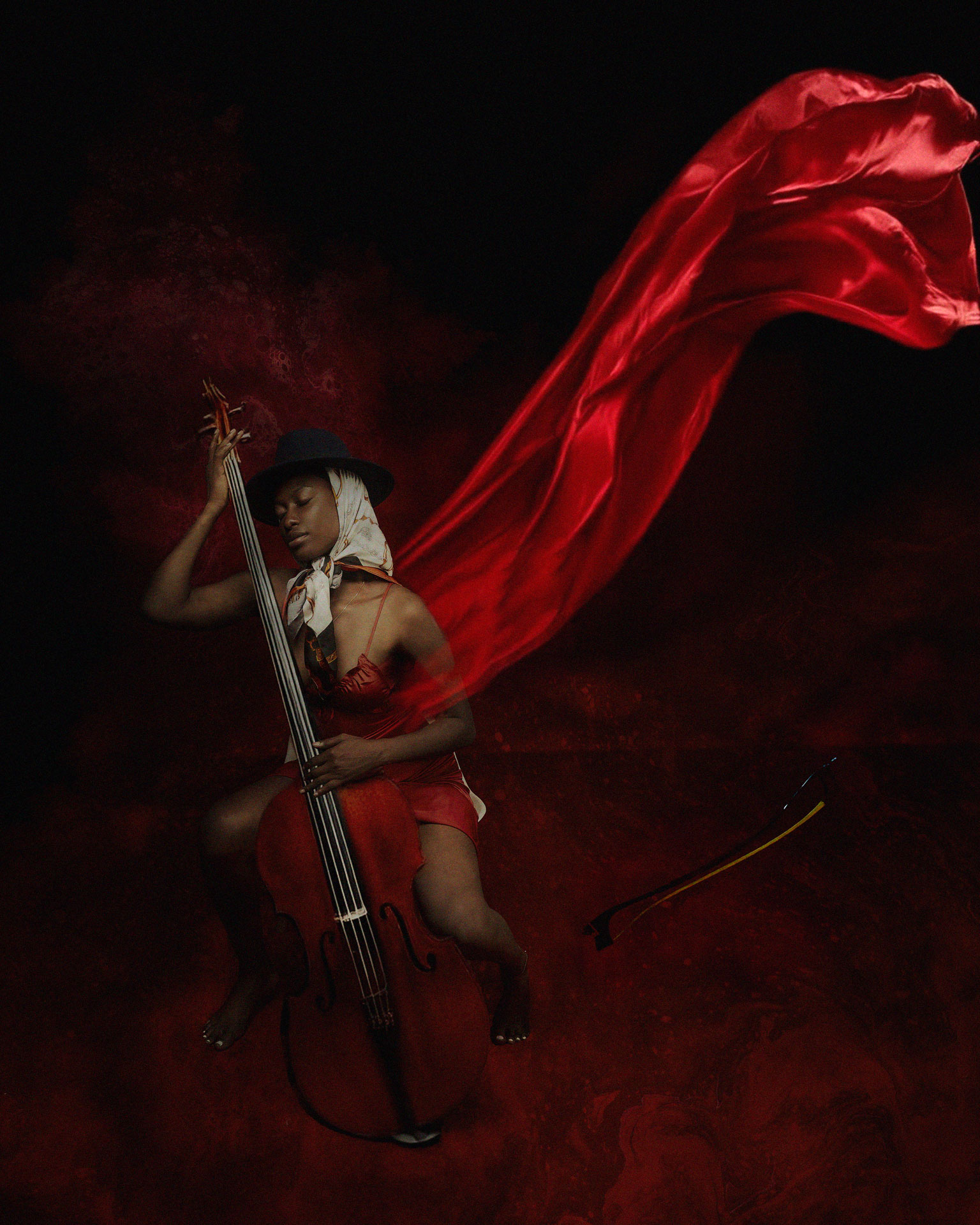

WHEN MY BODY STARTED TALKING
The Cost I Couldn't Photograph.
Yesterday, I ended my story with a statement:
“My body started saying the things my mouth had refused to say.”
And today, I want to talk about that.
Because there is a part of entrepreneurship that rarely makes it into our success stories.
We talk about capital.
We talk about investments.
We talk about clients.
We talk about expansion, revenue, branding, visibility, and building successful businesses.
But we hardly talk about what happens when the person building the business begins to fall apart.
I didn't understand it early enough.
And perhaps that was because I had spent so many years convincing myself that I could handle almost anything.
I was The Optimist, after all.
The person who found solutions.
The person who encouraged others.
The person who believed there was always another way.
The person who could turn difficult situations into opportunities.
But somewhere along the journey, I forgot something important.
"Even the person who gives hope needs somewhere to find hope."
At first, I thought I was simply tired.
And tiredness was something I understood.
Photography isn't exactly the easiest profession physically.
There are hours of standing.
Heavy equipment.
Long journeys.
Sleepless nights.
Editing sessions that stretch into the early hours of the morning.
Events where you're expected to remain alert, creative, physically active, regardless of how your body feels.
And when you add the responsibilities of running a business to all of that, the demands become even greater.
So whenever I felt exhausted, I had an explanation.
“It's the workload.”
Whenever I felt overwhelmed, I had another.
“It's just a busy season.”
Whenever I struggled to find motivation, I reassured myself.
“I'll be fine.”
But I wasn't paying enough attention to what was happening.
Because what started as exhaustion was gradually becoming something I could no longer dismiss.
My body was changing.
I began experiencing troubling symptoms.
My energy wasn't what it used to be.
My mind was becoming increasingly overwhelmed.
There were moments when even the thought of doing things I had previously enjoyed felt exhausting.
I was physically present, but emotionally, I was becoming distant.
And what frightened me wasn't simply the discomfort.
It was the uncertainty.
I didn't fully understand what was happening to me.
Was I sick?
Was I exhausted?
Was it the pressure?
Was it everything happening around me?
I had questions I couldn't answer right away.
And for someone who had built a reputation around providing answers, that was a difficult place to be.
One of the most dangerous things about being constantly needed is that you begin to treat your own well-being as something you can attend to later.
There's always something more urgent.
A client needs a response.
An event needs coverage.
A team member needs direction.
A deadline is approaching.
An invoice needs attention.
Someone needs reassurance.
And somewhere at the bottom of that endless list is a human being who also needs attention.
You.
But you keep postponing yourself.
You tell yourself you'll rest after the next job.
You'll take care of yourself after the next payment.
You'll slow down after the next event.
You'll finally take that break when business becomes stable.
But there's something I learnt the difficult way:
"If you keep waiting for business to let you rest, you may wait until your body decides for you."
I also discovered how difficult it was to admit that I wasn't okay.
Not because I didn't understand the importance of asking for help.
But because I had become so accustomed to being the person others relied upon.
There is a strange loneliness that sometimes comes with being seen as strong.
People celebrate your resilience.
They admire your consistency.
They praise your courage.
They tell you how much your journey inspires them.
And those things are beautiful.
But sometimes, the admiration creates an expectation you feel compelled to keep meeting.
"You become afraid to disappoint the image people have of you."
So you smile.
You show up.
You encourage someone else.
You tell another person not to give up.
And then you return to your own reality, where you are struggling to practice the same encouragement you so freely give.
That contradiction was becoming part of my life.
I was inspiring people while quietly struggling to inspire myself.
And then there was the emotional weight.
I had begun losing the excitement that once defined my relationship with photography.
Remember the teenage boy from Day 18?
The boy who held his film camera with so much excitement?
The boy who could make ordinary walls look beautiful?
The boy who could turn an angry auntie's expression into a smile?
That boy didn't need anybody to remind him to pick up a camera.
He loved it.
But years later, the man who had turned that passion into a company was beginning to struggle with the very thing that once gave him so much joy.
And that was painful.
Because when you build your livelihood around something you love, losing interest in that thing creates a different kind of fear.
If I no longer enjoy photography, what happens to Optimistic Visuals?
And perhaps the more frightening question was:
If I am no longer Optimist the photographer, who exactly am I?
I didn't have a comfortable answer.
Looking back, I realize that I had made one of the biggest mistakes a founder can make.
I had invested more deliberately in the sustainability of my brand than in the sustainability of myself.
I could justify spending money on equipment.
I could justify upgrading a camera.
I could justify investing in better lighting.
I could justify training.
I could justify traveling for business.
I could justify almost anything that promised to improve Optimistic Visuals.
But when it came to my own wellbeing, I often expected myself to manage with whatever was left.
And there is something deeply wrong with that arrangement.
What is the value of building a company that can produce beautiful photographs if the person behind it is gradually losing the ability to enjoy life?
What is the point of becoming successful if you are too exhausted to experience that success?
What is the point of building a name if protecting that name requires you to keep neglecting yourself?
These weren't questions I had seriously considered when everything was going well.
But life was beginning to force me to confront them.
There is also something I want young creatives and entrepreneurs to understand.
Your body is not another piece of equipment in your production kit.
When your camera develops a fault, you take it for repairs.
When your lens stops focusing properly, you investigate.
When your computer begins overheating, you pay attention.
When your hard drive shows signs of failure, you immediately think about protecting your files.
But what happens when you begin showing signs that something isn't right?
Do you give yourself the same attention?
Or do you keep pushing because there are people depending on you?
I had learnt to protect my tools.
I was still learning to protect myself.
And unlike a camera, there is no replacement body waiting on a shelf.
I don't want this chapter to suggest that every illness comes from stress or that every exhausted entrepreneur is experiencing the same thing.
Our bodies are different.
Our circumstances are different.
And symptoms deserve proper attention, not assumptions.
But I know what I experienced.
I know how overwhelmed I became.
I know how much I had been carrying.
And I know that I had ignored my own need for help for far too long.
Seeking help is not an admission that you have failed.
Sometimes, it is the most responsible decision you can make for yourself and for everything you are building.
I wish I had understood that sooner.
The most difficult part of this period wasn't even the physical discomfort alone.
It was watching my relationship with my own life begin to change.
Things were becoming less exciting.
My enthusiasm was fading.
I was becoming quieter.
And somewhere inside me, I was beginning to question how much longer I could continue at the same pace.
I didn't want to disappoint my clients.
I didn't want to disappoint my team.
I didn't want to disappoint the people who believed in me.
I certainly didn't want to disappoint the people who had supported this journey from the beginning.
So I kept trying.
But the truth was becoming increasingly difficult to ignore.
I was no longer simply tired of working.
I was becoming tired of what my life had become.
And that distinction matters.
Today, I understand something that took me years to learn:
"You cannot build a sustainable brand on an unsustainable version of yourself."
Your wellbeing is not separate from your business.
Your peace is not an unnecessary luxury.
Your health is not something you should sacrifice to prove your commitment.
And your ability to say, “I need help,” does not make you less of a leader.
Sometimes, the most important thing a founder can do for the future of a company is to recognize that the founder is human.
I didn't understand that early enough.
And by the time I began paying attention, I was already carrying more than I knew how to manage.
The boy who once photographed everything because it brought him joy was becoming a man who sometimes struggled to find joy in anything.
And I could no longer pretend that everything was fine.
My body had spoken.
My mind was exhausted.
And the life I had built around Optimistic Visuals was beginning to demand a decision I wasn't ready to make.
Because the next chapter wasn't going to be about getting another camera.
Or another client.
It was going to be about something far more difficult.
What happens when the person who has always kept everything moving begins to wonder whether he wants to continue at all?
11 DAYS TO YEAR 9.
The journey of raw moments in motion…
#TheDoomOfBeingTheBrand